
Composite Bonding Maintenance: How Long Does It Last and How Do You Protect It?
Posted on 21st September 2026 by Dr Yusra Al-Mukhtar

At Dr Yusra Clinic, we often see patients who are unsure about what happens to composite bonding once the initial treatment is complete. How long should it last? Will coffee stain it? Does it need special toothpaste? And how do you know when it needs repairing or replacing?
There is no fixed expiry date for composite bonding. How well it lasts depends on several things, including where the composite has been placed, how much has been used, your bite, your oral health and everyday habits.
In this guide, we explain how composite bonding changes over time, what can cause staining, wear or chips, and the simple things you can do to look after it for the years ahead.
How Long Does Composite Bonding Last?
There is no set lifespan for composite bonding. A small amount of composite used to smooth or reshape the edge of one tooth may experience very different wear from bonding that has been used more extensively across several teeth.
Your bite matters too. Some teeth naturally take more pressure than others when you bite and chew, so the same treatment will not necessarily last for exactly the same amount of time in every patient.
Rather than focusing on a particular number of years, it is more useful to look at how the bonding is actually holding up. If it still looks good, feels comfortable and the tooth underneath is healthy, there may be no reason to replace it simply because it has been there for several years.
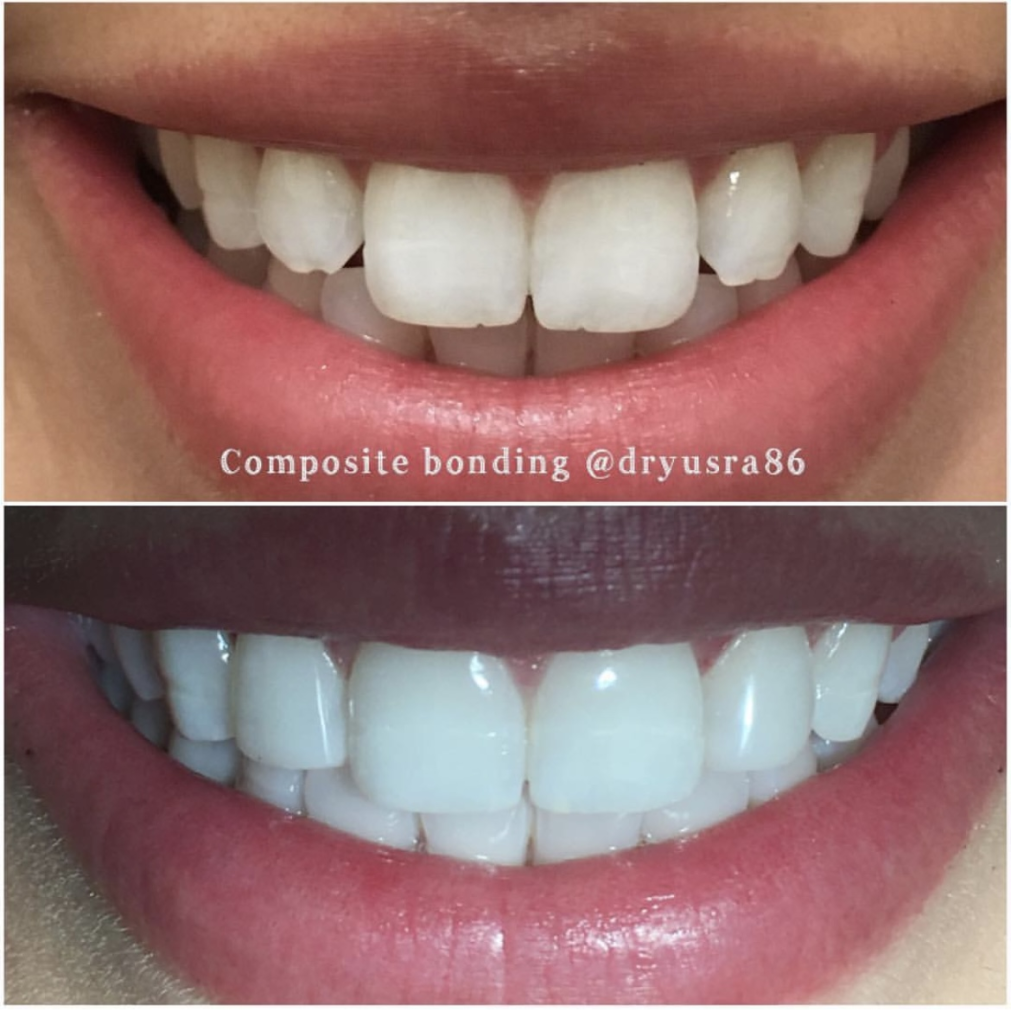
Composite bonding at Dr Yusra Clinic
What Happens to Composite Bonding as It Gets Older?
Composite is a strong tooth-coloured material, but it does not behave in exactly the same way as natural tooth enamel. When your bonding is first completed, it is carefully shaped and polished so that the surface feels smooth and blends naturally with the surrounding teeth.
Over time, normal eating, drinking and brushing can gradually change that finish. You may notice that the composite looks slightly less shiny, has picked up some staining or shows signs of wear. This does not necessarily mean it needs replacing. If the bonding is otherwise in good condition, a professional polish may sometimes be enough to freshen its appearance. If there are more noticeable changes, your dentist can assess what has happened and whether anything else needs to be done.
Does Composite Bonding Stain?
Yes, composite bonding can pick up stains over time. Coffee, tea, red wine, smoking and strongly coloured foods can all affect its appearance, particularly if you have them regularly. This does not mean you need to stop enjoying your morning coffee or avoid your favourite foods.
Simple habits can help. Drinking water after strongly coloured foods and drinks, for example, can help rinse the mouth, while good brushing and interdental cleaning help prevent staining and plaque from building up.
If your bonding starts to look darker, it is worth having it checked before assuming it needs replacing. Sometimes there is simply staining on the surface that can be improved with professional cleaning or polishing. In other cases, your natural teeth may have changed colour, making the original bonding easier to see.
Once we know what has caused the colour difference, we can decide whether anything actually needs to be done.
Can You Whiten Composite Bonding?
This is an important point to know if you have bonding and are thinking about Teeth Whitening.
Whitening treatments lighten your natural teeth, but they do not lighten composite in the same way. This means that if your bonding was originally matched to your natural tooth colour and you later whiten your teeth, the composite may begin to look slightly darker by comparison.
If you are planning both treatments, whitening would usually be completed first. Once you are happy with the colour of your natural teeth, the composite can be matched to that shade.
Already have bonding? You can still discuss teeth whitening with your dentist. It simply needs a little more planning so you understand how the existing composite may look afterwards.
Why Does Composite Bonding Chip?
Composite is designed to cope with normal everyday eating, but it can chip if it is placed under too much force.
Sometimes the cause is obvious, such as accidentally biting down on something particularly hard. Certain habits can also put unnecessary pressure on bonded teeth, including:
- biting your fingernails
- chewing pens
- crunching ice
- opening packaging with your teeth
- regularly biting very hard foods with your front teeth
If the same piece of bonding keeps chipping, however, there may be more to consider.
The way your upper and lower teeth meet could be placing extra pressure on one particular area. Grinding or clenching your teeth can have a similar effect.
At Dr Yusra Clinic, we would want to understand why the bonding keeps chipping rather than simply repairing the same area each time. Addressing the reason behind the problem can help us make a better decision about what to do next.
What Should You Do If Your Composite Bonding Chips?
A small chip does not necessarily mean the whole piece of bonding needs replacing.
Try not to file or smooth a rough edge yourself, and avoid putting too much pressure on the affected tooth until your dentist has taken a look.
They can check whether only the composite has been damaged or whether the natural tooth has also been affected. In many cases, a smaller repair may be possible.
If you have chipped the bonding following a knock or injury and the tooth is painful, sensitive or feels loose, arrange an appointment promptly.
How Should You Clean Composite Bonding?
Looking after bonded teeth is very similar to looking after your natural teeth. Brush twice a day and clean between your teeth regularly. Pay attention to the areas where the bonding joins the natural tooth, as plaque can still collect there.
Regular Dental Hygiene appointments are also important. Your hygienist can remove plaque, tartar and some external staining that may be difficult to manage with brushing alone. Remember, composite bonding changes the appearance or shape of a tooth, but the natural tooth underneath still needs protecting from decay. Your gums need looking after too.
Keeping the whole mouth healthy is one of the most important parts of maintaining your bonding.
Should You Use Whitening Toothpaste on Composite Bonding?
You do not usually need a special toothpaste just because you have composite bonding. It is worth being careful with very abrasive whitening toothpastes, however. Some work mainly by scrubbing away surface stains, and repeatedly using highly abrasive products may affect the smooth, polished finish of the composite over time.
If your bonding has become stained, speak to your dentist or hygienist rather than trying progressively stronger whitening products at home. A professional clean or polish may be a more suitable way to improve its appearance.
Can You Eat Normally with Composite Bonding?
Yes. You should still be able to enjoy a normal diet. There is no need to live on soft foods or worry every time you bite into something. Composite bonding is designed to become part of your everyday smile.
It is simply worth using a little common sense around exceptionally hard foods and objects, particularly if you have bonding along the edges of your front teeth. Think of it in the same way as looking after your natural teeth. Eating normally is fine. Using your teeth to crack something hard or tear open a packet is best avoided. Your dentist may give you more specific advice depending on where your bonding has been placed.
What If You Grind Your Teeth?
Grinding and clenching can put a surprising amount of pressure on your teeth, particularly if it happens while you sleep. Over time, that pressure can wear down natural teeth and may also contribute to chips or damage around bonded edges. Some people already know they grind their teeth. Others only discover it when their dentist notices signs such as worn tooth surfaces or repeated damage in the same areas.
If you think you may grind or clench, mention it to your dentist. They can look at your teeth and bite and advise whether it needs further attention.
What Happens If Your Teeth Move After Composite Bonding?
It is easy to think of adult teeth as staying permanently in the same position, but they can gradually move over time. This is particularly important if you had orthodontic treatment such as Invisalign or an Inman Aligner before your composite bonding. For example, an aligner may first be used to straighten the teeth, with composite then added to improve small details such as uneven edges, tooth shape or remaining gaps.
If those teeth move again, the composite may still be perfectly healthy, but the overall smile can begin to look different.
This is why wearing your retainers as advised after orthodontic treatment is so important. They help keep the teeth in the position that the bonding was originally planned around.
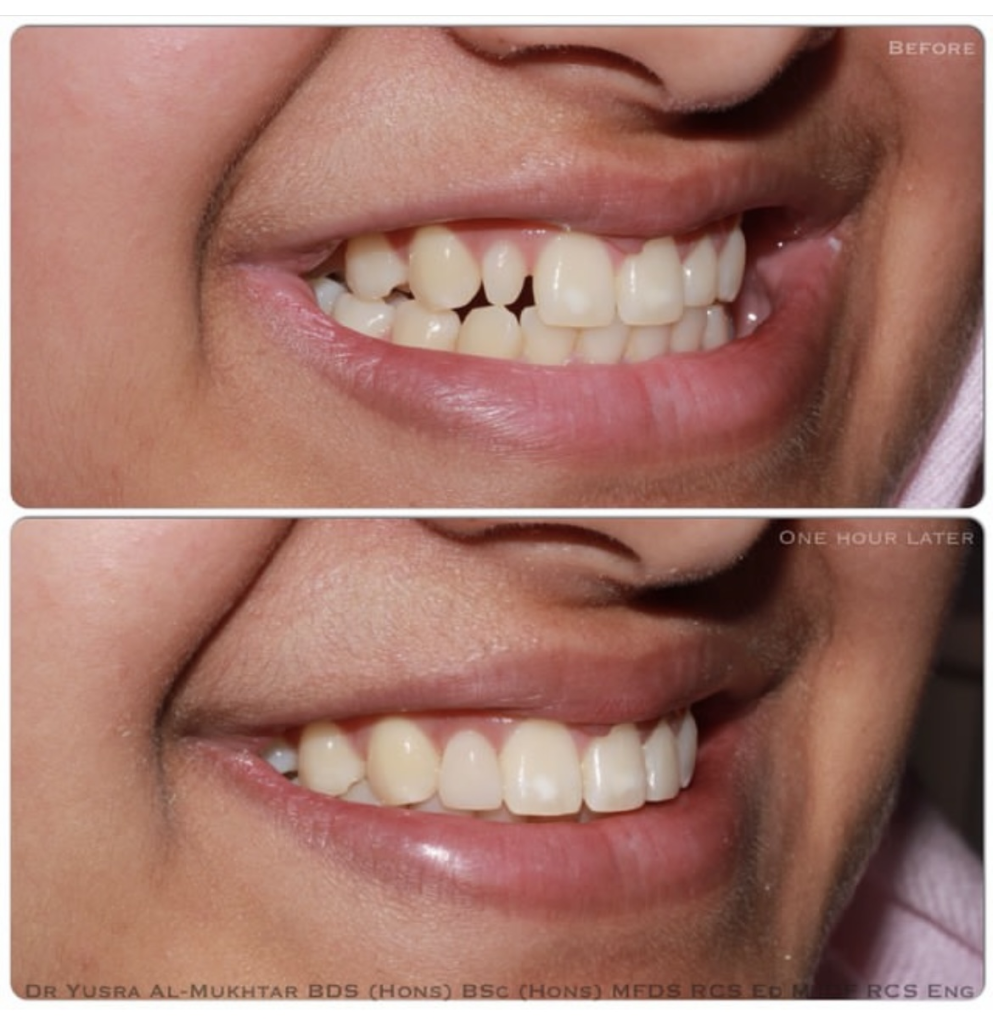
Composite bonding at Dr Yusra Clinic
When Does Old Composite Bonding Need Replacing?
Old composite does not automatically need replacing. There are several reasons your dentist might eventually recommend repairing or replacing it. The material may have become significantly worn, developed deeper staining, chipped repeatedly or no longer fit neatly around the tooth. Occasionally, there may be an issue with the natural tooth underneath that also needs attention.
Even then, replacing everything is not always necessary. Sometimes only one area needs repairing.
If there are repeated problems, it can also be useful to look at the smile more broadly.
For example, if bonding is repeatedly being used to disguise teeth that are out of position, Invisalign may be worth considering. If someone wants a more significant change to the colour and shape of several teeth, Porcelain Veneers may sometimes be discussed instead.
The right approach depends on your natural teeth, your bite and what you want to change. It should not be decided simply by how old the bonding is.
Frequently Asked Questions About Composite Bonding Maintenance
Can I use an electric toothbrush with composite bonding?
Yes. You can generally continue using an electric toothbrush as normal. Good brushing technique and using a suitable toothpaste are more important than whether your toothbrush is electric or manual.
Can I floss between bonded teeth?
Yes, and you should continue cleaning between your teeth regularly. If your bonding has changed the shape or spacing between particular teeth, your dentist or hygienist can show you the easiest way to clean those areas.
Can decay develop under composite bonding?
The composite material itself cannot decay, but the natural tooth can. Keeping the edges around the bonding clean helps protect the tooth underneath.
Why does my composite bonding suddenly feel rough?
A rough edge could mean that the surface has worn slightly or a small piece has chipped. If you notice a new change, have it checked rather than trying to smooth it yourself.
Can more composite be added to old bonding?
Sometimes. Your dentist will first need to look at the existing bonding and the tooth underneath to decide whether adding more material is the best option.
Does composite bonding need special maintenance appointments?
Not necessarily. How often you need dental and hygiene appointments depends on your individual oral health. If your dentist notices staining, wear or another change in the bonding, they may recommend additional maintenance when needed.
Looking After Your Composite Bonding for the Long Term
Composite bonding does not need a complicated maintenance routine. For most people, looking after it comes down to good oral hygiene, sensible everyday habits and paying attention if something starts to look or feel different.
You should still be able to eat normally, enjoy coffee and use your teeth without constantly worrying about damaging your bonding.
If you already have composite bonding and have noticed a change, or you are considering treatment and want to understand how to look after it before making a decision, you can book a consultation with the dental team at Dr Yusra Clinic.
Appointments are available in London, Liverpool and Manchester, with patients also welcomed from surrounding areas.

Dr Yusra Al-Mukhtar
Dr Yusra is a distinguished dental surgeon and a skilled medical aesthetic clinician with a wealth of experience in maxillofacial head and neck surgery and skin cancer surgery. She holds an impressive academic background, having graduated with first-class honours in Medical Science and Healthcare Management from Imperial College London and earned Honours and Distinction as a dental surgeon from King’s College London.Dr Yusra is a Level 7 Trainer in medical aesthetics, in line with Ofqual guidelines, and is renowned for her expertise in providing natural-looking non-surgical facelifts and a range of aesthetic treatments. Her commitment to patient well-being and safety is unwavering, making her a trusted practitioner in the field.