
Skin Laser Rejuvenation for Hands, Neck and Décolletage
Posted on 12th February 2026 by Olivia
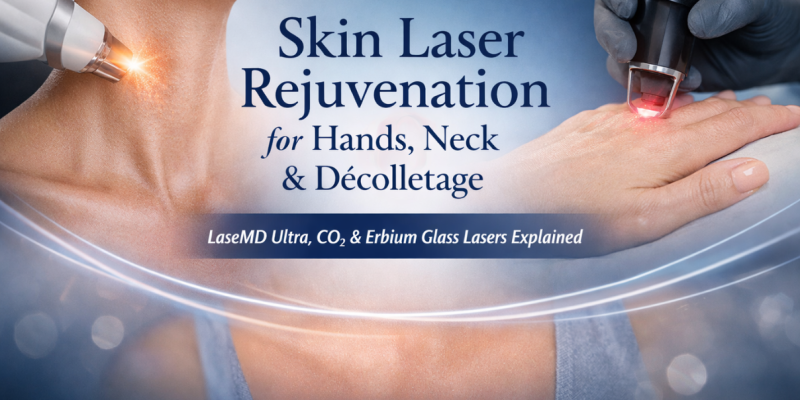
LaseMD Ultra, CO₂ and Erbium Glass Lasers Explained
So, what is the most effective approach for treating ageing skin on the hands, neck, and décolletage?
The short answer is this: laser skin rejuvenation is one of the most effective medical treatments for improving ageing skin on the hands, neck and décolletage. These areas age faster than the face, yet are often treated later. When performed correctly, with the right laser and the right patient selection, laser rejuvenation can significantly improve texture, pigmentation, crepiness and overall skin quality without surgery.
At Dr Yusra Clinic, laser treatments for non-facial skin are prescribed, not promoted. This article explains how modern lasers work on the hands, neck and décolletage, which technologies are appropriate, and why a consultation-led approach is essential for safe, natural-looking results.
Why the Hands, Neck and Décolletage Age Differently
These areas share three biological vulnerabilities that make them age more quickly than the face.
Thinner Skin and Faster Collagen Loss
The dermis on the neck, chest and hands is thinner, with fewer fibroblasts producing collagen and elastin. This leads to earlier crepiness, fine lines and laxity, particularly from the mid-40s onwards.
Cumulative Sun Exposure
Unlike the face, these areas are rarely protected consistently. UV exposure accelerates collagen breakdown, triggers pigmentation and damages elastin fibres, resulting in mottled tone and rough texture.
Why Skincare Alone Has Limits
Medical-grade skincare supports barrier health and pigment regulation, but it cannot penetrate deeply enough to remodel collagen. This is where laser rejuvenation for hands, neck and décolletage becomes clinically relevant.
What Is Laser Rejuvenation for Non-Facial Skin?
Laser rejuvenation uses controlled thermal energy to stimulate biological repair within the skin.
How Laser Energy Interacts with the Skin
Laser energy creates precise, fractional zones of heat within the dermis. This triggers:
- Fibroblast activation
- New collagen and elastin production
- Epidermal renewal and smoother texture
The surrounding untreated tissue allows faster healing and safer outcomes.
Non-Ablative vs Ablative Lasers
- Non-ablative lasers heat the dermis without removing surface skin. Downtime is minimal and results build gradually.
- Ablative lasers, such as CO₂, remove microscopic columns of tissue for deeper resurfacing, with more downtime but more dramatic change.
Both approaches have a place when prescribed correctly.
LaseMD Ultra for Hands, Neck and Décolletage
LaseMD Ultra is often the first step for patients new to laser rejuvenation.
What Is LaseMD Ultra?
LaseMD Ultra is a fractional thulium laser that creates micro-channels in the skin while leaving the surface largely intact. This allows controlled collagen stimulation with minimal recovery.
Benefits for Delicate Areas
LaseMD Ultra is particularly suited to thinner skin because it:
- Improves fine lines and crepiness
- Refines texture
- Softens pigmentation
- Enhances delivery of topical actives
This makes it ideal for early to moderate skin ageing on the neck and chest.
Downtime and Treatment Course
Downtime is usually limited to redness and mild roughness for a few days. Treatments are delivered as a course, with progressive improvement rather than sudden change.
CO₂ Laser Resurfacing for Advanced Skin Ageing
CO₂ laser resurfacing remains the gold standard for more severe damage.
How CO₂ Laser Works
CO₂ lasers are fractional and ablative, targeting water within the skin to remove microscopic columns of tissue while heating the surrounding dermis. This produces powerful collagen remodelling.
When CO₂ Is Appropriate
CO₂ laser resurfacing may be recommended for:
- Severe sun damage
- Deep wrinkles on the neck
- Marked textural irregularity on the décolletage
It is not a first-line treatment for everyone.
Recovery, Risks and Realistic Expectations
Downtime is longer and requires strict aftercare. This treatment demands careful patient selection to minimise risks such as prolonged redness or pigmentary change.
Erbium Glass Laser for Controlled Skin Renewal
Erbium glass lasers sit between LaseMD Ultra and CO₂ in intensity.
What Is an Erbium Glass Laser?
This is a non-ablative fractional laser that heats the dermis without removing surface skin, offering collagen stimulation with a favourable safety profile.
Ideal Use Cases
Erbium glass lasers are commonly used for:
- Fine lines
- Early laxity
- Pigmentation and uneven tone
- Patients requiring lower downtime
They are often chosen for maintenance or combination protocols.
Choosing the Right Laser for Your Skin
There is no single “best” laser for everyone.
Factors That Influence Laser Selection
At Dr Yusra Clinic, laser choice is guided by:
- Skin thickness and integrity
- Pigmentary risk
- Lifestyle and downtime tolerance
- Treatment goals and timeline
Why Medical Assessment Matters
Incorrect laser choice can worsen pigmentation or compromise skin health. A medical assessment ensures treatment supports long-term skin integrity rather than short-term improvement alone.
Results, Longevity and Maintenance
Laser rejuvenation is a biological process, not a cosmetic trick.
When Results Appear
Collagen remodelling takes weeks to months. Improvements continue as the skin repairs itself.
How Long Results Last
Ageing continues, but results are long-lasting when supported by:
- Medical skincare
- Sun protection
- Maintenance treatments
Combination approaches often deliver the most stable outcomes.
Risks, Limitations and Common Misconceptions
What Lasers Cannot Do
Laser rejuvenation cannot:
- Replace surgical skin removal
- Halt ageing permanently
- Deliver instant perfection
Potential Risks
When poorly prescribed, risks include pigmentation changes, prolonged erythema and delayed healing. These risks are minimised through medical oversight and appropriate aftercare.
Laser Rejuvenation at Dr Yusra Clinic
Laser rejuvenation at Dr Yusra Clinic is consultation-led and medically driven. Treatment plans focus on long-term skin health, not aggressive correction, ensuring results remain natural, safe and proportionate.
Book a Medical Laser Consultation
If you are concerned about ageing skin on the hands, neck or décolletage, the first step is a comprehensive medical assessment. At Dr Yusra Clinic, laser treatments are prescribed based on skin structure, pigment risk and long-term skin health.
👉 Book your consultation at https://dryusra.com/booking/
FAQs
Is laser rejuvenation safe for the neck and décolletage?
Yes, when the correct laser and settings are used following a medical assessment.
Which laser is best for crepey skin on the neck?
This depends on severity. LaseMD Ultra and erbium glass lasers suit early changes, while CO₂ may be considered for advanced ageing.
How many treatments are needed?
Non-ablative lasers require a course, while ablative treatments may be one-off with longer recovery.
Does laser rejuvenation improve pigmentation on the hands?
Yes. Lasers are highly effective for sun-induced pigmentation when prescribed correctly.
Can laser treatments be combined with other procedures?
Yes. Lasers are often combined with skin boosters, microneedling or medical skincare for enhanced results.
Award-Winning Aesthetic Excellence
Dr. Yusra Al-Mukhtar has been recognised as the Best Medical Aesthetic Practitioner of the Year for three consecutive years; a prestigious honour awarded based on exceptional clinical expertise, patient outcomes, safety standards, and dedication to aesthetic excellence. She is also the first medical practitioner to be inducted into the Aesthetic Medicine Wall of Fame, reflecting her leadership and influence in aesthetic medicine in the UK and internationally.
At Dr Yusra Clinic, we are equally proud to be named Best Aesthetic Clinic in the North of England and Best Clinical Team three times, recognising our commitment to personalised, science-led care.