Enlarged Pores: Why They Happen and What Actually Works to Reduce Them
Posted on 6th July 2026 by Dr Yusra Al-Mukhtar
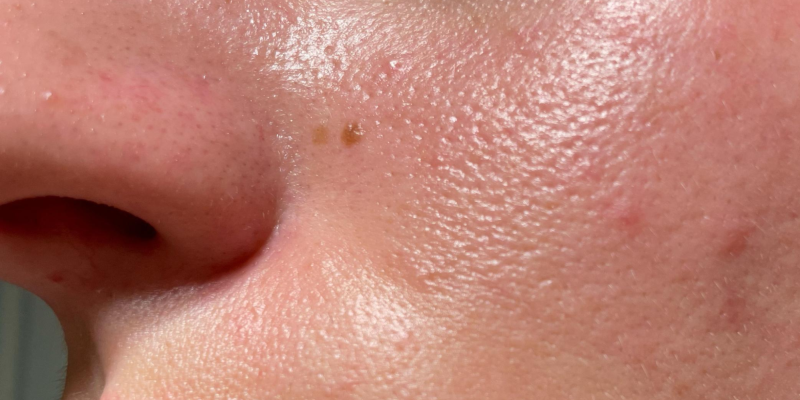
Enlarged pores are a common concern, yet they are often misunderstood. Many patients are convinced that pores can be completely “closed”, usually after trying multiple products that promise unrealistic results.
In reality, pores are a natural and essential part of your skin’s structure. They cannot be removed, but with the right approach, they can be made far less noticeable. The key is understanding why they appear enlarged in the first place, then choosing treatments that address the underlying cause rather than just the surface.
At Dr Yusra Clinic, we take a considered, clinical approach. Rather than relying on one-size-fits-all solutions, we assess how your skin behaves in detail and build a treatment plan that targets the specific factors contributing to your pore size, whether that is oil production, congestion, or loss of collagen.
What actually causes enlarged pores?
Pores become more visible for a few different reasons, and in most cases it is a combination rather than a single factor.
Excess oil production
When the skin produces more oil, pores stretch to allow sebum to reach the surface. This is why enlarged pores are often more noticeable in the T-zone. In clinic we often see this in patients with oily or combination skin, particularly in their 20s and 30s.
Loss of collagen and elasticity
As collagen declines with age, the structure around the pore weakens. Instead of staying tight, the pore begins to widen and lose its definition. This is why pores often look more elongated or “open” over time rather than simply larger.
Congestion and buildup
Dead skin cells, oil, and debris can collect within pores, stretching them further. This can also make them appear darker or more obvious.
Sun damage
Chronic sun exposure breaks down collagen and thickens the outer layer of the skin, both of which make pores appear more prominent.

Can enlarged pores be permanently reduced?
This is where expectations need to be realistic. Pores cannot be permanently removed or “shrunk” in the literal sense. However, their appearance can be significantly improved by:
- Strengthening the surrounding skin structure
- Reducing oil production
- Keeping pores clear and refined
- Improving overall skin texture and tone
With the right combination of treatments, pores can appear smoother, tighter, and far less noticeable.
Why skincare alone often isn’t enough
Medical-grade skincare plays an important role, particularly with ingredients like retinoids, salicylic acid, and niacinamide. However, for many patients, skincare alone reaches a limit.
What tends to happen in more stubborn cases is that the pore size is being driven by deeper structural changes in the skin. This is where in-clinic treatments become essential, as they can target collagen, texture, and oil production more effectively.
What treatments actually work for enlarged pores?
At Dr Yusra Clinic in London, Liverpool and Manchester, we take a tailored approach based on what is driving your pore size.
SkinPen Micro-needling
SkinPen is often one of the first treatments we consider, particularly for patients with early textural concerns.
What it does:
It creates controlled micro-injuries in the skin, triggering collagen production and improving skin structure.
Why it helps pores:
As collagen builds, the skin around the pores becomes firmer, which helps them appear tighter and more refined.
Who it is for:
- Mild to moderate enlarged pores
- Early signs of ageing
- Uneven skin texture
For milder cases we would usually start here, as it offers a good balance between results and downtime.
RF Micro-needling
RF micro-needling takes the concept of standard micro-needling further by delivering radiofrequency energy into deeper layers of the skin.
What it does:
Combines collagen stimulation with targeted heat to tighten the skin more effectively.
Why it helps pores:
This dual action improves skin firmness and reduces pore visibility more noticeably, particularly in patients with laxity.
Who it is for:
- More visible or stubborn pores
- Skin that has started to lose firmness
- Acne scarring alongside enlarged pores
If standard micro-needling is not delivering enough improvement, we would normally look at RF micro-needling as the next step.
Chemical Peels
Chemical peels are often underestimated when it comes to pore refinement.
What they do:
They exfoliate the top layers of the skin, removing buildup and encouraging cell turnover.
Why they help pores:
- Keep pores clear
- Reduce congestion
- Smooth overall skin texture
Who it is for:
- Oily or congested skin
- Blackheads and visible pore blockage
- Dull or uneven skin tone
In clinic we often use peels alongside other treatments to maintain results and improve skin clarity between sessions.
Hydrafacial
Hydrafacial is a popular choice, but it is often misunderstood as purely a “glow” treatment.
What it does:
It combines deep cleansing, exfoliation, extraction, and hydration in one session.
Why it helps pores:
- Removes debris that stretches pores
- Improves skin hydration, which supports skin function
- Leaves pores looking cleaner and less visible
Who it is for:
- Congested skin
- Patients new to treatments
- Maintenance between more advanced procedures
Hydrafacial works particularly well as part of a broader plan rather than a standalone solution for enlarged pores.
Laser Skin Resurfacing
For more advanced cases, laser treatments can make a significant difference.
What it does:
Targets deeper layers of the skin to stimulate collagen and resurface the outer layer.
Why it helps pores:
- Improves skin density
- Refines texture
- Reduces the depth and visibility of pores
Who it is for:
- More severe pore concerns
- Sun-damaged skin
- Patients wanting more dramatic results
This is often considered when other treatments have not achieved the desired level of refinement.
Medical-Grade Skincare
Good skincare is essential. A well-structured routine typically includes:
- Retinoids to improve cell turnover and collagen
- Salicylic acid to keep pores clear
- Niacinamide to regulate oil production
Without this foundation, even the best in-clinic treatments will not maintain their results effectively.
How long does it take to see results?
This depends on the treatment and the underlying cause.
- Hydrafacial and peels can give an immediate improvement in clarity
- Micro-needling results develop gradually over several weeks
- RF and laser treatments build results over multiple sessions
Patients often begin to notice visible improvement within a few weeks, but more meaningful changes in pore size typically develop over a few months.
Do pores come back after treatment?
Pores will not “come back” in the sense that they disappear and reappear, but their appearance can worsen again if the underlying causes are not managed.
This is why maintenance is important. Ongoing skincare, periodic treatments, and sun protection all play a role in keeping pores refined long term.
FAQ: Enlarged Pores
Can you permanently shrink pores?
No, pores cannot be permanently shrunk, but their appearance can be significantly reduced with the right treatments and skincare.
What is the best treatment for enlarged pores?
It depends on the cause. Micro-needling, RF micro-needling, chemical peels, Hydrafacial, and laser treatments are all effective when used appropriately.
Are enlarged pores a sign of oily skin?
Often, yes. Excess oil production is one of the main causes, but ageing and sun damage also play a role.
Do pore strips work?
They can remove surface debris temporarily, but they do not treat the underlying cause and can sometimes irritate the skin.
How many sessions will I need?
Most treatments require a course, typically 3 to 6 sessions, depending on your skin and goals.
Can makeup make pores worse?
Heavy or comedogenic makeup can contribute to congestion if not removed properly, which may make pores appear larger.
Is laser treatment safe for all skin types?
Not all lasers are suitable for every skin type. A consultation is essential to determine the safest and most effective option.
At what age should I start treating enlarged pores?
There is no set age. Treatment depends on when pores become a concern and what is causing them.
Taking the next step
If you have been trying to manage enlarged pores without seeing consistent improvement, it is often a sign that the approach needs to go beyond skincare alone.
In clinic, the priority is understanding what is driving the concern, whether that is oil production, congestion, or changes in skin structure, so treatment can be targeted properly rather than approached in isolation.
At Dr Yusra Clinic, we take a consultation-led approach, building treatment plans in stages to deliver consistent, natural-looking results. This is supported by recognised expertise, with Dr Yusra Al-Mukhtar awarded Best Medical Aesthetic Practitioner of the Year for three consecutive years and inducted into the Aesthetic Medicine Wall of Fame. The clinic has also been named Best Aesthetic Clinic in the North of England and Best Clinical Team three times.
As a leading aesthetic clinic in London, Liverpool and Manchester, we focus on results that feel refined and in keeping with your skin. Book a consultation so we can guide you towards what will work best for you.

Dr Yusra Al-Mukhtar
Dr Yusra is a distinguished dental surgeon and a skilled medical aesthetic clinician with a wealth of experience in maxillofacial head and neck surgery and skin cancer surgery. She holds an impressive academic background, having graduated with first-class honours in Medical Science and Healthcare Management from Imperial College London and earned Honours and Distinction as a dental surgeon from King’s College London.Dr Yusra is a Level 7 Trainer in medical aesthetics, in line with Ofqual guidelines, and is renowned for her expertise in providing natural-looking non-surgical facelifts and a range of aesthetic treatments. Her commitment to patient well-being and safety is unwavering, making her a trusted practitioner in the field.