Straight Teeth, Healthier Smile: The Benefits Beyond Appearance
Posted on 17th August 2026 by Dr Yusra Al-Mukhtar
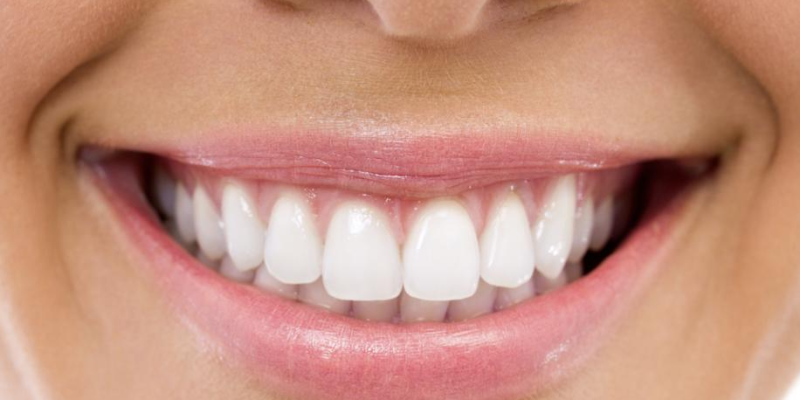
When people think about straightening their teeth, the first thing that usually comes to mind is appearance. A straighter smile can certainly improve confidence, but the benefits of orthodontic treatment extend much further than aesthetics alone.
At Dr Yusra Clinic in Liverpool, we often see patients who initially enquire about straightening their teeth for cosmetic reasons, only to discover that improving tooth alignment can also make it easier to maintain oral health, improve bite function and reduce unnecessary wear on the teeth over time.
The goal is not just creating a straighter smile, it is about achieving a healthier, more balanced bite that supports long-term dental health while delivering natural-looking results that complement your individual features.
In this guide, we’ll explore why straight teeth contribute to a healthier smile, the health benefits of orthodontic treatment, how clinicians decide which treatment is most appropriate, and why a personalised approach often delivers the best long-term outcome.
Why are straight teeth healthier?
Teeth are designed to work together in a very precise way. When they are crowded, rotated or poorly aligned, everyday activities such as brushing, flossing and chewing can become more difficult.
Misaligned teeth may contribute to:
- Plaque accumulating in hard-to-clean areas
- Increased risk of tooth decay
- Gum inflammation and periodontal disease
- Uneven tooth wear
- Small chips and fractures
- Increased strain on certain teeth
- Difficulty cleaning between crowded teeth
None of these problems happen simply because a smile looks crooked. They develop because poor alignment changes how the teeth function and how easily they can be cleaned. For many patients, improving alignment is therefore an investment in both appearance and long-term oral health.
Can straightening your teeth improve your oral health?
One of the biggest advantages of orthodontic treatment is that it creates an environment that is easier to maintain. When teeth overlap or twist, toothbrush bristles and floss often struggle to reach every surface. Even patients with excellent oral hygiene can find themselves repeatedly developing plaque build-up or inflammation in the same areas.
Once teeth are properly aligned, cleaning generally becomes far more effective.
Patients often find it easier to:
- Brush thoroughly around every tooth
- Floss between teeth
- Reduce plaque accumulation
- Maintain healthier gums
- Lower the risk of future dental problems
Of course, orthodontic treatment does not replace good oral hygiene. Straight teeth still require regular brushing, flossing and professional dental care, but maintaining those habits usually becomes much easier.
Does a straighter bite help protect your teeth?
Appearance is only one part of the picture. The way your upper and lower teeth meet affects how forces are distributed whenever you bite, chew or clench. If certain teeth absorb more pressure than others, they may gradually develop excessive wear.
Over time, this uneven loading can contribute to worn tooth edges, small fractures, chipping, tooth sensitivity and increased pressure on existing restorations such as fillings or crowns.
At Dr Yusra Clinic, we often see patients whose front teeth have gradually worn unevenly because their bite places excessive force through just a few teeth rather than distributing it evenly across the whole smile.
While not every bite problem requires orthodontic treatment, correcting alignment where appropriate may help reduce these uneven forces, protect the teeth from further wear and support better long-term oral health.
Is Invisalign only for cosmetic treatment?
This is one of the most common misconceptions surrounding clear aligners. Although Invisalign is well known for creating straighter smiles, treatment is planned around both aesthetics and function. Digital treatment planning allows tooth movement to be carefully mapped before treatment even begins, helping clinicians improve alignment while considering the patient’s bite, smile and overall dental health.
Many adults choose Invisalign because the clear aligners are discreet and removable, but clinicians often recommend it because it can address a wide range of orthodontic concerns. Depending on the individual, Invisalign may be used to treat crowded teeth, spacing, mild to moderate bite concerns, rotated teeth and teeth that have shifted following previous orthodontic treatment.
Another important advantage is that the aligners can be removed for eating, brushing and flossing. This allows patients to maintain their usual oral hygiene routine throughout treatment, which many find considerably easier than cleaning around fixed braces.
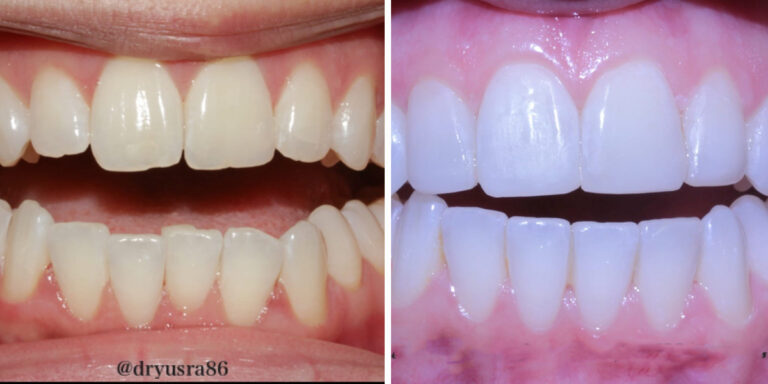
When is an Inman Aligner a better option?
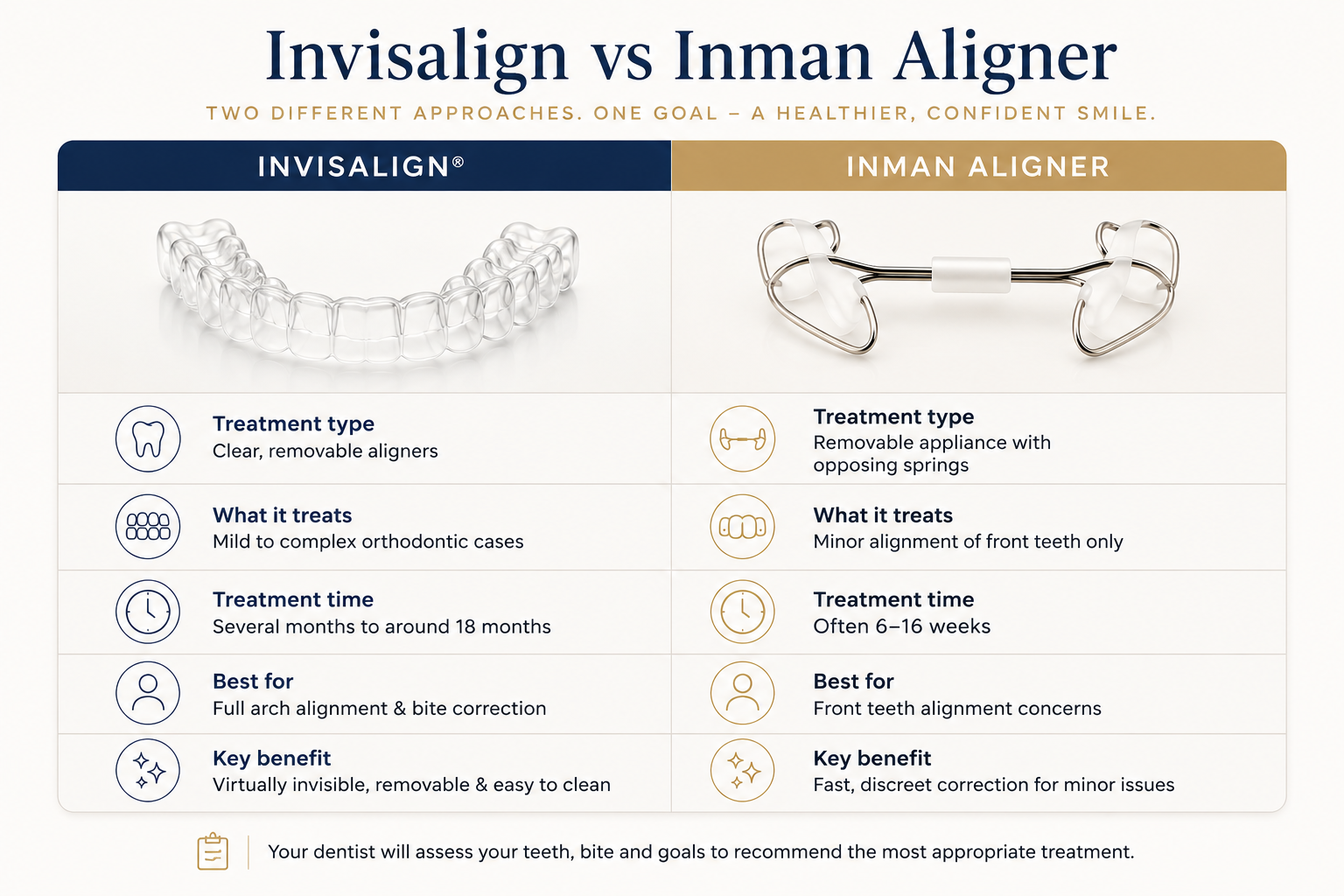
Although Invisalign is suitable for many patients, it is not always the most appropriate solution. For milder cases involving only the front teeth, an Inman Aligner may sometimes be recommended.
Unlike Invisalign, which uses a sequence of clear aligners to move multiple teeth, the Inman Aligner is specifically designed to correct minor crowding or protrusion affecting the front teeth using gentle opposing forces. Treatment is typically much shorter than comprehensive orthodontic treatment for suitable candidates.
An Inman Aligner may be appropriate for patients with mild crowding of the front teeth, small gaps, minor cosmetic alignment concerns or teeth that have shifted following previous orthodontic treatment. Because it has a more limited scope, it is generally not used for more complex bite problems or full arch correction.
Choosing between Invisalign and an Inman Aligner therefore depends less on patient preference and more on what the teeth actually require. A detailed assessment allows your clinician to recommend the option that is most appropriate for your smile and your long-term oral health.
How do dentists decide which treatment is right?
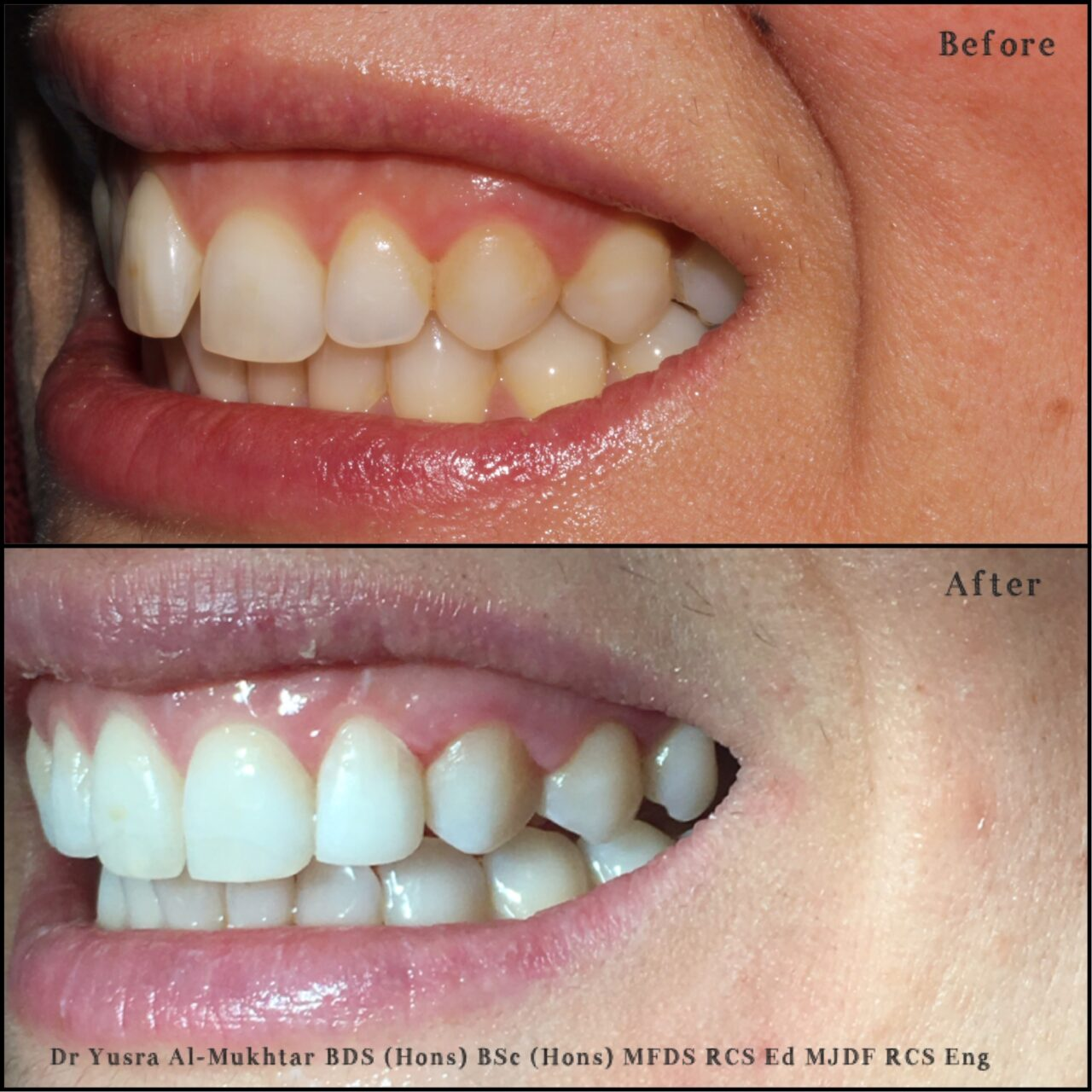
There is rarely a single treatment that suits everyone. At Dr Yusra Clinic, our treatment recommendations begin with a detailed assessment of your teeth, bite and overall oral health rather than simply selecting the most popular orthodontic option.
Factors that influence treatment include:
- Degree of crowding
- Bite relationship
- Tooth wear
- Gum health
- Previous orthodontic treatment
- Long-term treatment goals
For milder cases, we would usually start by assessing whether limited orthodontic movement with an Inman Aligner can achieve the desired result. Where more comprehensive tooth movement or bite correction is required, Invisalign often provides greater flexibility and precision. The objective is always to recommend the treatment that best supports both function and aesthetics rather than following a one-size-fits-all approach.
Can teeth straightening be combined with cosmetic dentistry?
In practice, orthodontic treatment is often just one stage of a broader smile improvement plan. Once teeth have been aligned, some patients choose to enhance their results further with cosmetic treatments:
- Teeth whitening to brighten the newly aligned smile.
- Composite bonding to refine small chips, minor irregularities or tooth shape.
- Porcelain veneers in carefully selected cases where tooth shape, wear or significant cosmetic concerns remain after alignment.
In many cases, completing orthodontic treatment first allows cosmetic treatments to be more conservative because less reshaping of healthy tooth structure may be required. Rather than masking alignment issues, the teeth are first positioned correctly before any finishing touches are considered.
Why does retaining your result matter?
Straightening teeth is only one part of treatment. Once teeth have moved into their new positions, they naturally have a tendency to drift back over time. Retainers help maintain the new alignment while the surrounding bone and supporting tissues stabilise. Without appropriate retention, even beautifully aligned teeth may gradually relapse.
This is why long-term retention forms an essential part of every orthodontic treatment plan, regardless of whether treatment has been carried out using Invisalign or an Inman Aligner.
Frequently Asked Questions
Does straightening teeth help prevent gum disease?
Straight teeth are generally easier to clean effectively, which can help reduce plaque accumulation and support healthier gums. Good oral hygiene and regular dental visits remain essential.
Is Invisalign suitable for adults of any age?
Many adults are suitable candidates for Invisalign. Suitability depends more on the condition of the teeth, gums and bite than on age alone.
Will wearing an Inman Aligner affect my speech?
Some patients notice a slight change to speech during the first few days, but most adapt quickly as they become accustomed to wearing the appliance.
Do I need to wear retainers forever?
Long-term retainer wear is recommended to help maintain your results. Your dentist will explain the most appropriate retention plan for your individual case.
Can orthodontic treatment improve worn teeth?
Straightening teeth does not reverse existing wear, but it may help reduce uneven forces that contribute to further wear. Restorative treatments can be considered once alignment has been completed.
Considering treatment for a straighter, healthier smile?
If you’re thinking about improving your smile, booking a consultation is the best place to begin. A detailed assessment allows us to understand not only how your teeth look, but also how they function, helping us determine whether orthodontic treatment could benefit your long-term oral health.
At Dr Yusra Clinic, we create personalised treatment plans using options including Invisalign, Inman Aligners, teeth whitening, composite bonding and porcelain veneers where appropriate. If you’re ready to take the next step, book a consultation at our clinic in Liverpool, where we’ll recommend the most appropriate treatment to help you achieve a healthier, straighter smile with natural-looking results.

Dr Yusra Al-Mukhtar
Dr Yusra is a distinguished dental surgeon and a skilled medical aesthetic clinician with a wealth of experience in maxillofacial head and neck surgery and skin cancer surgery. She holds an impressive academic background, having graduated with first-class honours in Medical Science and Healthcare Management from Imperial College London and earned Honours and Distinction as a dental surgeon from King’s College London.Dr Yusra is a Level 7 Trainer in medical aesthetics, in line with Ofqual guidelines, and is renowned for her expertise in providing natural-looking non-surgical facelifts and a range of aesthetic treatments. Her commitment to patient well-being and safety is unwavering, making her a trusted practitioner in the field.